
This is the Sunday just before the week of the fasting period, preceding the Feast of Our Lord Jesus Christ’s Transfiguration. In the Armenian Apostolic Church, it's called the Fast of Transfiguration, lasting from Monday to Friday.


|
Sunday
|
Monday
|
Tuesday
|
Wednesday
|
Thursday
|
Friday
|
Saturday
|
|---|---|---|---|---|---|---|
1 event,
This is the Sunday just before the week of the fasting period, preceding the Feast of Our Lord Jesus Christ’s Transfiguration. In the Armenian Apostolic Church, it's called the Fast of Transfiguration, lasting from Monday to Friday. |
0 events,
|
0 events,
|
0 events,
|
0 events,
|
0 events,
|
1 event,
The Ark of the Covenant is the most sacred sanctity of the Old Testament. It consisted of a pure gold covered wooden chest with an elaborate lid called the Mercy seat. The Ark is described in the Book of Exodus as containing the two stone tablets of the Ten Commandments. According to the New Testament Book... Read More » |
1 event,
The Feast of the Transfiguration of Our Lord Jesus Christ is one of the five main “Tabernacle” feasts of the Armenian Apostolic Church. It commemorates the transformation or the “transfiguration” that came over Jesus while He was praying. Christ’s face shone like the sun and his clothes became a radiant and gleaming white. The... Read More » |
0 events,
|
0 events,
|
0 events,
|
1 event,
The Prophet Isaiah is the first of the four major prophets of the Old Testament. He was born and spent almost his entire life in the city of Jerusalem, in the eight century B.C. The Armenian Church commemorates the prophet Isaiah, who is best known for the longest prophetic book in the Old Testament... Read More » |
0 events,
|
1 event,
St Thaddeus the Apostle and St Sandoukht the Virgin are two of the most venerated saints in the Armenian Church. The “Great Conversion” of the Armenian nation to Christianity is significantly connected with their names. Following the Ascension of Christ, according to the Lord’s message: “Go then to all peoples everywhere and make them... Read More » |
|
0 events,
|
0 events,
|
0 events,
|
0 events,
|
1 event,
The Septuagint (first translation of the Hebrew Old Testament), uses the name “Patriarch” when referring to the forefathers or ancestors of spiritual and lay leaders of the Old Testament. They are: Adam, Abel, Seth, Enosh, Enoch, Noah, Melchizedek, Abraham, Isaac, Jacob, Joseph, Moses, Aaron, Eliezer, Joshua, Samuel, Samson, Jephthah, Barak, Gideon and other Holy... Read More » |
0 events,
|
1 event,
The Armenian Church commemorates St Aristages (Aristakes), Vrtanes, Krikoris (Grigoris) and Housik (Husig); St Gregory's sons and grandsons and Daniel the Syrian. The day of commemoration (according to the present calendar in force since 1774-75) falls on the Saturday before the Third Sunday of Transfiguration. The rest of the members of the Gregorid family,... Read More » |
|
0 events,
|
0 events,
|
1 event,
Saints Hosea, Joel, Amos, Obadiah, Jonah, Micah, Nahum, Habakkuk, Zephaniah, Haggai, Zechariah and Malachi In addition to Isaiah, Jeremiah, Ezekiel and Daniel (the four major prophets of the Old Testament), the Armenian Church commemorates the following twelve minor prophets. The Prophets were those persons through which God spoke his will to the people of... Read More » |
0 events,
|
1 event,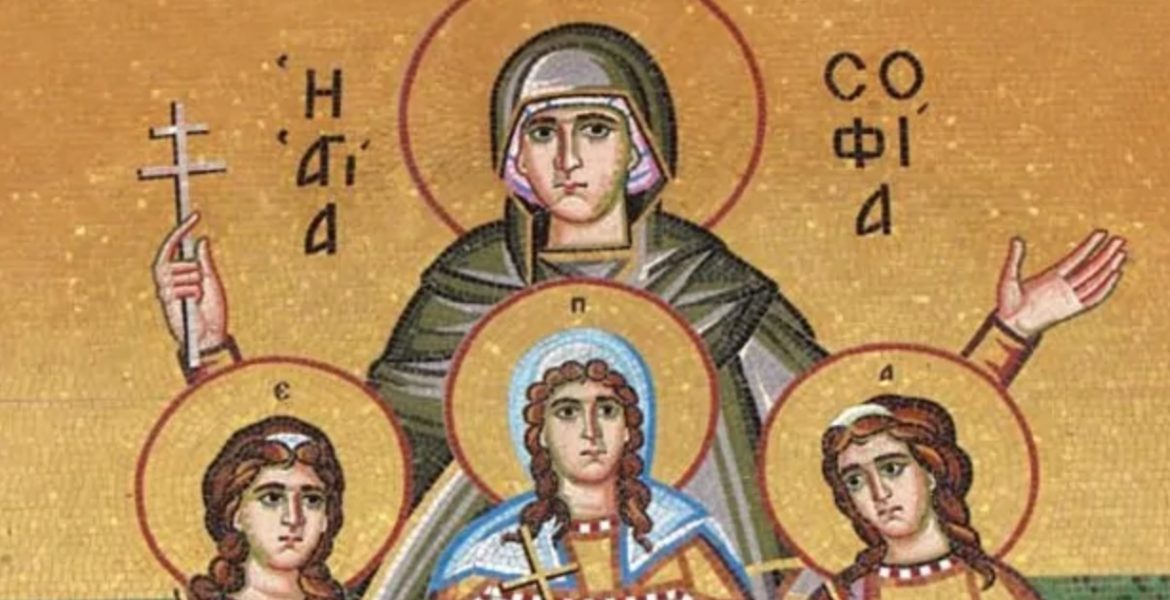
These names are of Christian origin and in Greek mean wisdom, faith, hope and love. Sophia was a child of a noble family and lived near the city of Rome. Having lost her husband, she completely devoted herself to God. Being an ardent follower of Christ, she raised her three daughters in the Christian... Read More » |
0 events,
|
1 event,
Some time after the spread of Christianity, the ascetic movement began. Hermits were people who devoted themselves entirely to God, withdrew to uninhabited places and through prayer and fasting, by the grace of God, overcame human weaknesses, achieving spiritual perfection. Years later, hermits also received the gift of healing through miracles and prayers.... Read More » |
|
0 events,
|
1 event,
The Armenian Church commemorates Theodosius I, the Roman Emperor (379 to 395) who put an end to the last of paganism and the Arian heresy in the empire (The doctrine denying the true divinity of Christ, named after the Alexandrian priest Arius c. 250–c. 336). He was recognised as a “just and mighty Christian... Read More » |
0 events,
|
0 events,
|
0 events,
|
0 events,
|
1 event,
St. Gregory the Theologian (also known as Gregory of Nazianzus), has left a rich literary heritage, which was translated into Armenian in the 5th to 8th centuries AD. In all probability, St. Moses of Khoronk created part of the translations into Armenian. St. Gregory the Theologian is one of the most prominent figures of... Read More » |


